Storm-Rated Anchoring for Mobile Homes in Montgomery
Anchoring is the system that keeps a manufactured home tied to the ground, and in central Alabama that means weather is part of the conversation. But “storm-rated” is a technical term tied to a documented system, a specific structure, and applicable installation requirements — it is not a guarantee that a home is storm-proof, and it is not a label any set of straps can claim.
This page explains how storm-rated anchoring is approached for manufactured homes near Montgomery — what an assessment evaluates, what the limits of any anchoring system are, and why no system is represented here as guaranteed wind protection. It does not publish universal anchor depths, strap tensions, or wind-zone assignments, and it does not claim tornado-proof performance.
Understanding Anchoring Systems in Central Alabama
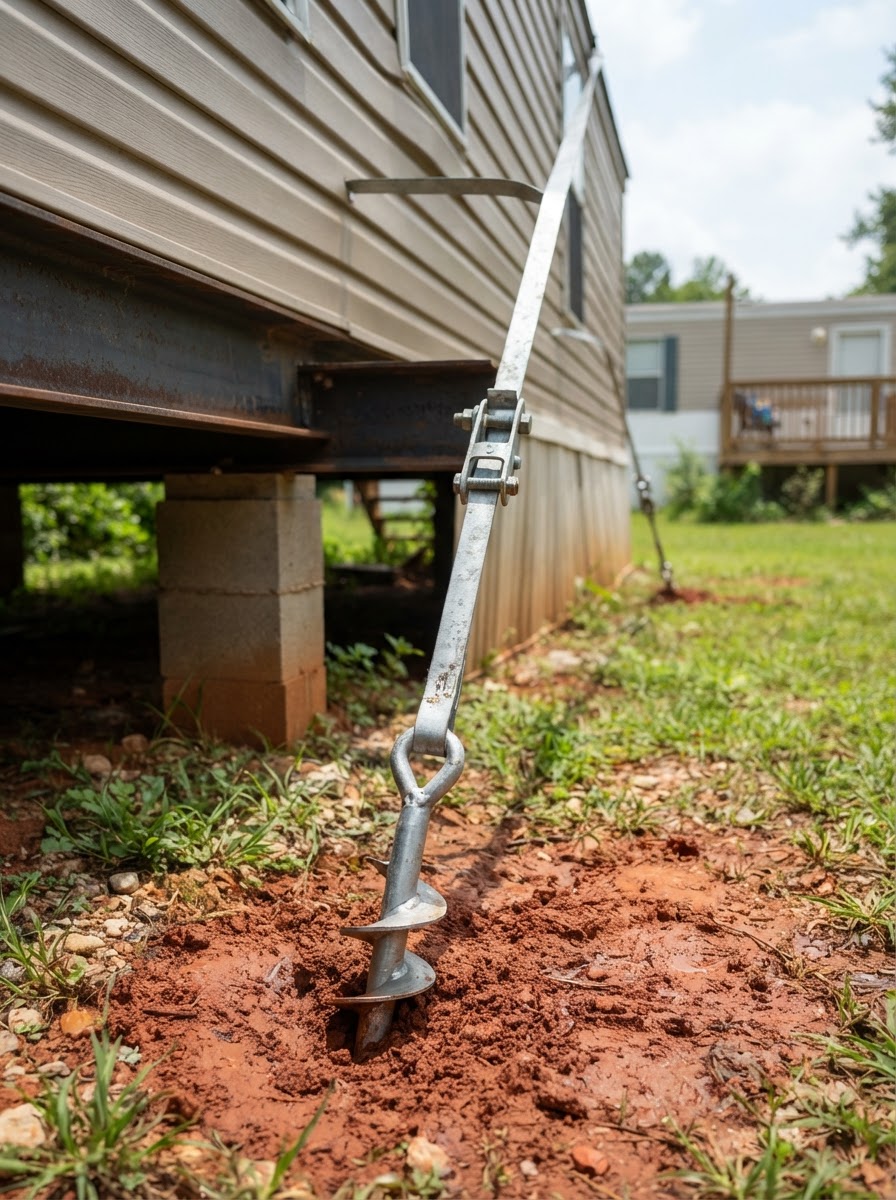
A manufactured-home anchoring system is a set of components working together — straps, connection hardware, ground anchors, and the frame connections — installed according to the manufacturer's instructions and the applicable requirements for the structure and site. The components below describe what an assessment considers; they are not a universal specification, and no single component is assumed to be right for every home.
Tie-Down Straps
Connection Hardware
Ground Anchors
Existing Installation Documentation
Component Deterioration
Previous Modifications
A system is more than its parts
A suitable anchoring system is the components working together as a documented whole, installed for the specific home and site. Replacing one part without considering the rest, or assuming one specification fits every home, is how an anchoring system fails to perform.
Understanding Storm-Related Anchoring Ratings
Wind-zone and system-rating questions require accurate technical documentation and applicable-authority guidance — they are not answered by a contractor's opinion or by a generic “Alabama is Wind Zone X” assumption. HUD designates wind zones for manufactured homes where applicable, manufacturers document what their systems are rated for, and local conditions and installation determine whether a rating applies. This page does not invent Alabama-wide wind-zone assignments or universal anchor requirements.
Documented Systems
Structure-Specific
Site Conditions
Verified, Not Assumed
Not a Guarantee
No Storm-Proof Claims
No anchoring eliminates storm risk
An anchoring system can reduce risk; it does not eliminate it. No system is represented here as guaranteed protection from a tornado, hurricane, or any specific weather event, and actual performance depends on installation, site, and the event itself.
What an Anchoring Assessment Determines — and What It Doesn't
An anchoring assessment identifies the existing system, its condition, and what — if anything — is appropriate. It does not certify storm protection, and it does not promise that any repair or replacement will guarantee performance in a storm. The categories below describe what an assessment sorts among.
Visible Anchoring Concerns
Corroded straps, damaged hardware, or missing components — identified and described, not diagnosed from appearance alone.
Hardware Replacement
Where a component is unsuitable, replacement of that part — considered in the context of the whole system, not in isolation.
Complete System Evaluation
Where the whole system is in question, a broader evaluation rather than a component-by-component patch.
Approved Installation
Where new or replacement work is appropriate, it follows the documented system and applicable requirements.
Engineering Assessment
Where structural or wind-resistance questions exceed ordinary anchoring work, a licensed professional evaluation is the appropriate next step.
Storm Preparedness
Coordination and planning context — distinct from, and not a substitute for, the physical anchoring work.
No universal anchor depth, strap tension, tie-down spacing, or wind-zone assignment is published here. Suitable values depend on the documented system, the manufacturer's instructions, the applicable authority, and the site — and where an engineering evaluation is warranted, it is performed by a licensed professional. No anchoring system is represented as tornado-proof or guaranteed storm protection.
Storm-Rated Anchoring Questions Near Montgomery
Common questions from homeowners about storm-rated anchoring, documented requirements, and the limits of any anchoring system.
Related Anchoring, Tie-Down & Storm Services
- Mobile Home Tie-Downs and AnchoringThe primary anchoring overview
- Tie-Down Strap ReplacementComponent replacement considerations
- Park-Wide Tie-Down InspectionsMulti-unit anchoring coordination
- Mobile Home Community Storm PreparednessCommunity planning context
- Contact & Anchoring InquiryDescribe the home and existing hardware
Discuss a Storm-Rated Anchoring Question
If you have a question about storm-rated anchoring for your manufactured home near Montgomery — whether about existing hardware condition, documentation, or what an assessment can determine — describing the home, the observed components, and any available records helps frame the inquiry. Where details are unknown, a clear “not sure” is acceptable.
Your inquiry will be reviewed and you will be contacted about appropriate next steps. No anchoring system is represented here as tornado-proof or guaranteed storm protection, and no specific wind-zone, anchor-depth, or tension specification is assumed for your property before it is evaluated.