
Mobile Home Re-Leveling Montgomery
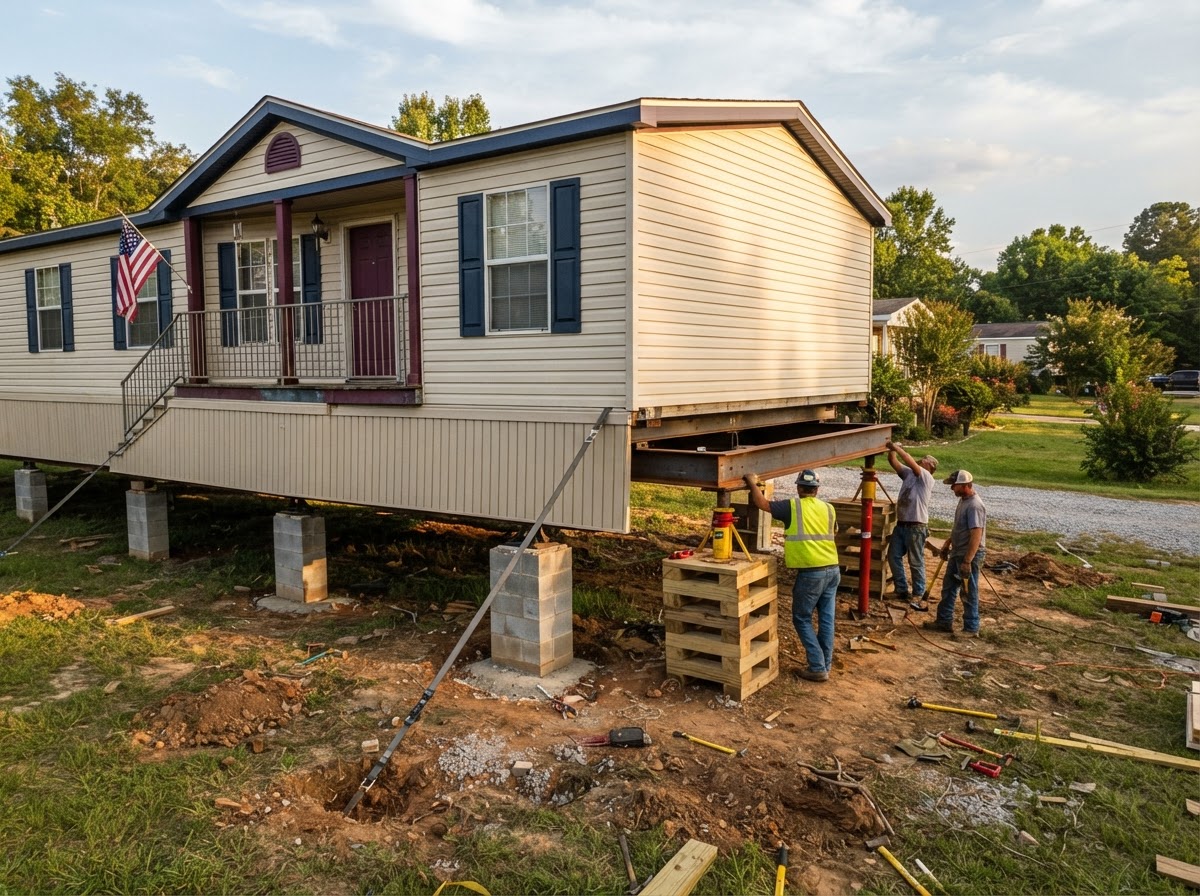
Re-leveling addresses a home that was once level and has since shifted. Over time, supports can settle, clay soils can move with seasonal moisture, and drainage changes can soften the ground beneath a home. This page explains what re-leveling involves, how it differs from initial setup and related repairs, and how to request an assessment of your particular home near Montgomery.
When Mobile Home Re-Leveling May Be Needed in Montgomery
The signs that raise a re-leveling question usually appear gradually in a home that has been in place for a while. A floor that used to feel flat may begin to slope toward one wall, or a door that always latched easily may start to stick or swing open on its own. New cracks at the corners of windows or above door frames can also suggest the frame is no longer sitting level on its supports.
Several conditions can contribute to that drift. Supports beneath the home can settle over years, particularly on Central Alabama clay soils that expand and shrink with wet and dry seasons. Drainage changes — water pooling near the home or a crawl space that stays damp — can soften the ground supports rest on. Existing piers or footings can deteriorate, and earlier installation conditions can influence how a home behaves as it ages. None of these proves re-leveling is the correct response on its own; the same signs can come from floor framing, moisture, or hardware wear, which is why an assessment evaluates conditions rather than applying one diagnosis to every home.
Gradual floor changes
Doors that began binding
Soil & drainage shifts
Support settlement
Aging supports
Prior installation factors
Symptoms are reviewed, not assumed
The Re-Leveling Assessment Process Around Montgomery
A useful request begins with what you can describe safely from inside and around the exterior of your home — no crawling underneath, no moving equipment, and no entering an unstable area. Sharing the home's configuration, location, what you have noticed, and when changes began helps identify what kind of qualified assessment may be appropriate.
An assessment then reviews the existing support system, the site and soil, drainage, the anchoring hardware, and the home's configuration and available installation information. Because a home that has already drifted may have underlying causes, findings may point to re-leveling, pier replacement, drainage work, or a combination — and the actual scope always depends on professional evaluation of the conditions at your home, not a fixed procedure.
1 · Describe the concern
Share the home's configuration, location, and the changes you have noticed — without entering a crawl space.2 · Review existing conditions
The request is reviewed for what information and what qualified assessment may be appropriate.3 · Evaluate supports, soil, and drainage
Observable conditions are assessed to determine whether re-leveling, support repair, drainage work, or another response fits.4 · Discuss scope and next steps
Findings shape the next conversation — with no guaranteed schedule before conditions are evaluated.
Re-Leveling Versus Other Repairs Beneath a Mobile Home
Re-leveling repeats a leveling correction on a home that has drifted out of level. It is closely related to — but not the same as — several other services, and treating them as interchangeable can lead to work that does not address the real condition. The right scope depends on what an assessment actually finds at your home.
Re-leveling
Initial leveling
Pier replacement
Foundation repair
Floor framing repair
Drainage correction
Conditions vary by home and site
Mobile Home Re-Leveling Questions Near Montgomery
Common questions about re-leveling — with answers that do not promise a result before conditions are evaluated.
Explore Related Leveling & Foundation Services
Describe the Changes You're Seeing and Request a Re-Leveling Assessment
If your home was once level and has started to shift — sloping floors, doors that bind, or changes after wet weather — describing the situation helps determine whether re-leveling or a related service is the right next step. Share your home's configuration, location, and the changes you have noticed.
Your request will be reviewed and you will be contacted about appropriate next steps — with no obligation to proceed and no guaranteed scheduling before conditions are evaluated.