
Mobile Home Community Storm Preparedness Montgomery
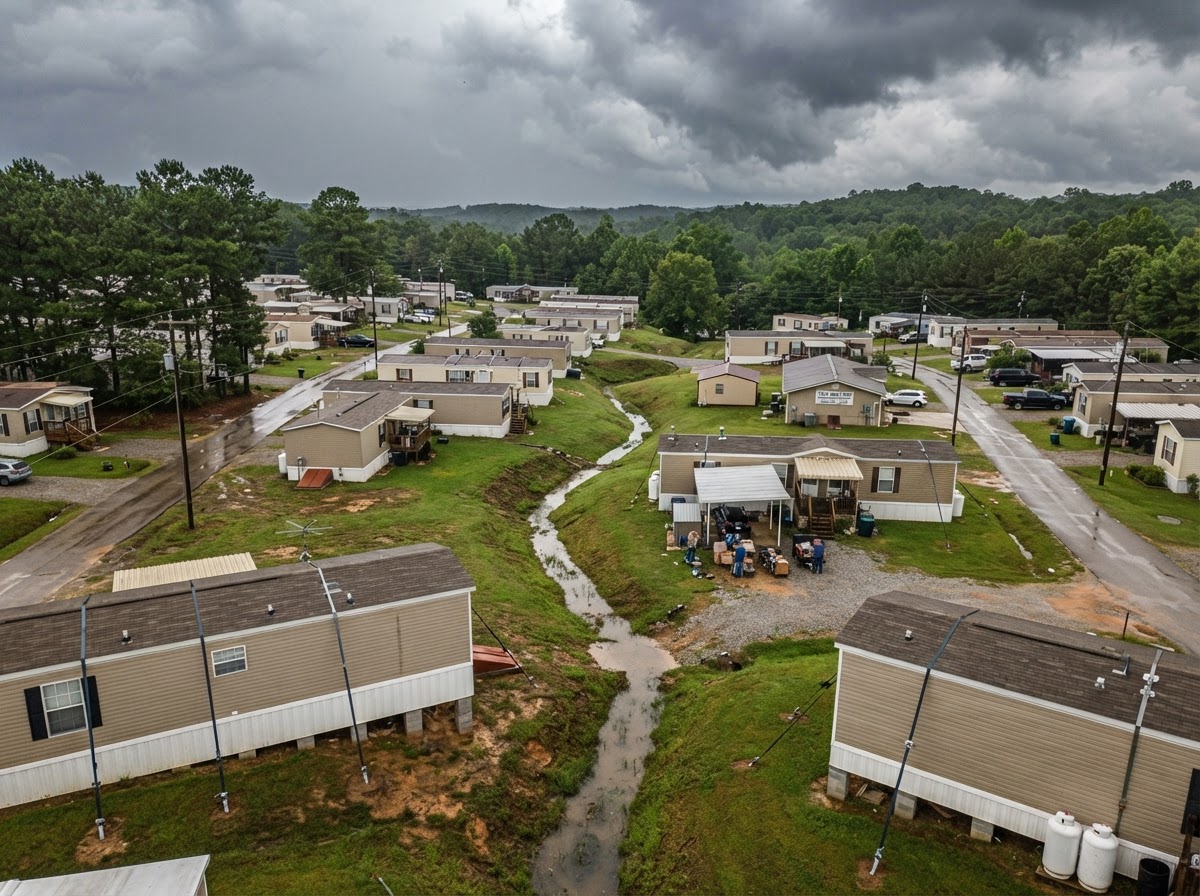
Manufactured-home communities in Central Alabama face severe weather every season. Sensible preparedness starts before a storm — with an honest look at anchoring systems, drainage, skirting, and property records — and continues afterward with safe, appropriate assessment of any visible changes. This page offers practical planning context for park owners and community managers.
It does not present this business as an emergency-management authority, and it does not promise storm protection, immediate dispatch, or guaranteed response. Evacuation, shelter, and life-safety guidance should follow responsible public authorities.
Reviewing Community Conditions in Central Alabama
A manufactured-home community's resilience to severe weather depends in part on the condition of its anchoring systems, supports, skirting, and drainage — all of which can be reviewed before a storm. The points below describe what a park owner or manager may consider, not a guarantee that any inspection makes a community storm-proof.
Anchoring-System Questions
Visible Tie-Down Deterioration
Existing Support Conditions
Drainage Concerns
Loose or Damaged Skirting
Site Access and Records
Inspection reduces uncertainty, not risk
A pre-storm review can document conditions and surface concerns worth addressing — but it does not eliminate storm risk. Any claim of a wind or storm rating must be supported by the applicable documented system and its proper installation, not by a generic inspection.
Coordinating Around Montgomery-Area Weather
Preparedness planning combines property documentation, communication, and coordination with the right professionals. For life-safety decisions — evacuation, shelter, warnings — residents and managers should follow local emergency-management authorities and official weather alerts, not a private plan invented by a contractor.
Management Communication
Resident Awareness
Official Weather Alerts
Property Documentation
Authorized Inspection Coordination
Professional Evaluation
Safe Post-Weather Assessment in Montgomery Communities
After severe weather, the first priority is safety — not inspection. Residents and managers should avoid unstable structures, downed utilities, and flooded areas. Once it is safe, visible concerns can be documented and an appropriate assessment requested.
Safe Property Access
Wait for official all-clear guidance before walking a damaged community. Do not enter unstable structures or crawl beneath damaged homes.
Visible Support Concerns
Document shifted or damaged supports, pier movement, or changes in floor alignment only when it is safe to observe them.
Water Intrusion
Standing water beneath or around homes may indicate drainage or plumbing concerns worth evaluating — separate from any leveling question.
Anchoring and Debris
Damaged tie-downs, displaced anchors, or fallen debris around supports are reasons to request evaluation rather than to adjust or remove components yourself.
Utility Hazards
Downed power lines, gas odors, or exposed utilities are emergencies — contact the appropriate utility authority or emergency services, not a leveling contractor.
Appropriate Assessments
Request an evaluation for visible concerns. No immediate dispatch, emergency repair, or guaranteed response time is promised here; availability is confirmed through an inquiry.
This page does not promise storm-proof anchoring, emergency dispatch, immediate response, or same-day repairs. Evacuation, shelter, and life-safety decisions should follow local emergency-management authorities. For active utility or structural emergencies, contact the appropriate emergency services.
Community Storm Preparedness Questions Near Montgomery
Common questions from mobile home park owners and community managers about pre-storm planning and post-weather assessment.
Related Anchoring & Assessment Services
Discuss Community Storm Preparedness Planning
If you manage a manufactured-home community and want to plan around severe weather — reviewing anchoring, drainage, and documentation — describing the community and its conditions helps start that conversation. Share what you know, and where a detail is uncertain, that is acceptable.
Your inquiry will be reviewed and you will be contacted about appropriate next steps. No emergency dispatch, guaranteed response time, or storm-proof outcome is promised; what is appropriate is determined for the specific community and confirmed through the inquiry.