Church and School Portable Building Leveling Montgomery
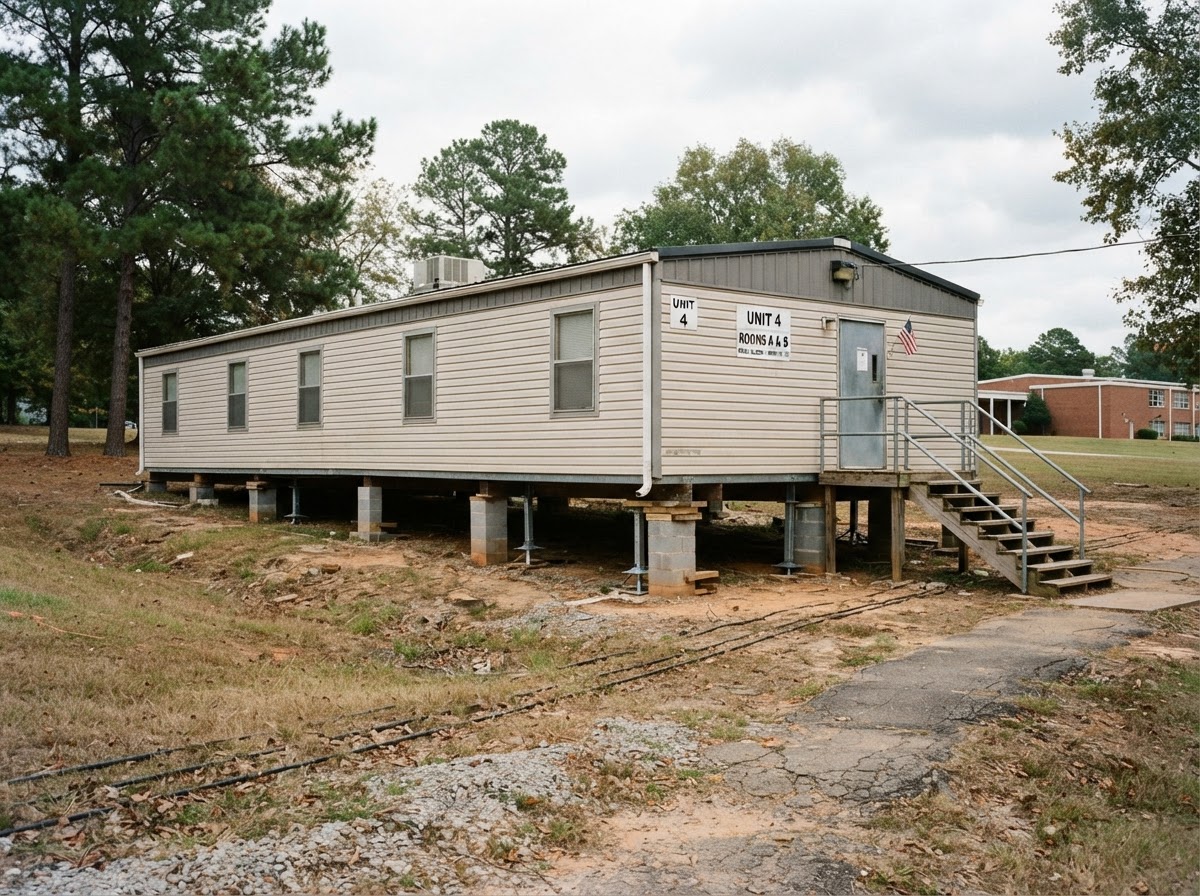
Portable classrooms, church annexes, and other modular institutional buildings rest on support systems that can shift, settle, or show alignment changes over time — especially after relocation or extended exposure to Central Alabama ground conditions. When a portable building develops uneven floors, doors that no longer close cleanly, or visible changes at its supports, an assessment can help clarify whether the concern involves the support system, the structure, or something else.
This page explains how an institutional portable-building concern may be evaluated and coordinated. It does not claim that this business holds school-district contracts, public procurement approvals, or specialized facility credentials. Which work is appropriate, and by whom, is confirmed through an inquiry.
Portable Building Leveling Considerations in Montgomery
Portable and modular institutional buildings share a basic reality with manufactured housing: they rest on supports intended to keep the floor level and the structure stable. But a church classroom, a school portable, and a manufactured home can follow different construction standards, and their support and occupancy requirements are not interchangeable. The concerns below describe what a facility manager may observe — not a confirmed diagnosis.
Uneven Floors and Support Shifts
Door and Window Alignment Changes
Moisture, Drainage, and Ground Conditions
Changes After Relocation or Installation
Symptoms are not a diagnosis
An uneven floor or a sticking door in a portable classroom is a reason to request an evaluation — not proof that the supports have failed. Whether the appropriate response is leveling, a repair, a professional evaluation, or simply hardware adjustment is determined for the specific building.
Evaluating a Church or School Portable Building Near Montgomery
An assessment for an institutional portable building begins with understanding the actual structure rather than applying a generic manufactured-home procedure. Portable classrooms and modular church facilities can be modular buildings, relocatable units, or other configurations — each with its own construction standard, manufacturer documentation, and applicable authority.
Building Classification
Existing Support System
Installation Documentation
Intended Occupancy
Site Conditions
Qualified Professional Involvement
Institutional Access, Authorization & Professional Requirements
Portable buildings on church and school property carry operational considerations that a residential leveling project does not. Work on an occupied facility has to be coordinated around schedules, occupant safety, and the property's own authorization procedures — and some situations require professional involvement that goes beyond what a contractor assessment provides.
Facility Access Around Schedules
Active schools and churches operate on their own calendars. Access for any assessment or follow-up work is arranged around class times, services, and activities, and through the facility's own authorization process rather than assumed.
Applicable Building Requirements
A modular classroom or portable facility may be subject to building-code, occupancy, or inspection requirements that differ from residential manufactured housing. Which requirements apply is identified for the specific building and jurisdiction.
Inspection Versus Engineering
A general support observation by a contractor is not the same as a certification by a licensed engineer. Where an engineering evaluation, an accessibility review, or an occupancy determination is required, it is performed by the appropriately qualified professional — not substituted by leveling.
Documentation
Records of the building classification, manufacturer documentation, prior installation or relocation, and any prior evaluations help frame a project. Where documentation is incomplete, that is noted rather than papered over with assumptions.
No claim is made here that leveling resolves school closures, accessibility compliance, occupancy approvals, or code violations on its own. Portable-building work on an institutional property may require authorizations and professionals this business does not claim to hold — which arrangements apply is confirmed through the inquiry.
Portable Building Leveling Questions for Montgomery Facilities
Common questions from church and school facility managers about portable-building support, alignment, and coordination.
Related Leveling & Inspection Services
Discuss a Church or School Portable Building Concern
If a portable classroom, church annex, or other modular facility on your property is showing uneven floors, door changes, or support concerns, describing the building, its occupancy, and what you have observed helps start that conversation. Share what you know — and where a detail is uncertain, that is acceptable.
Your inquiry will be reviewed and you will be contacted about appropriate next steps. Whether a concern calls for leveling, a repair, a professional evaluation, or coordination with the responsible authority is determined for the specific building — not assumed in advance.