Mobile Home Installation Permits in Montgomery County, Alabama
A clear, practical guide for property owners placing, replacing, or relocating a manufactured home within Montgomery County, Alabama. Understand the critical distinction between City and County jurisdictions, zoning approvals, installation oversight, and required documentation.
Do you need a permit to place or install a manufactured home in Montgomery County?
Yes. However, the exact permits and approving agencies depend primarily on whether your parcel is located within the corporate limits of the City of Montgomery or in unincorporated Montgomery County. Inside the City of Montgomery, manufactured homes are strictly governed by the municipal Zoning Ordinance (administered by the Land Use Division) and building/trade permits issued by the Inspections Department. In unincorporated Montgomery County, county engineering, health department septic approvals, and state AMHC installation oversight apply. In all locations, the physical installation must comply with Alabama Manufactured Housing Commission (AMHC) rules and carry an official installer decal.
1. Start With the Property's Jurisdiction: City vs. County
The single most important step before purchasing, moving, or placing a manufactured home in the Montgomery area is determining whether the parcel falls inside the corporate limits of the City of Montgomery or in unincorporated Montgomery County. These two authorities operate entirely different land-use rules, application processes, and inspection departments.
Inside the City of Montgomery
Governed by the City of Montgomery Land Use Division and Department of Inspections. Manufactured homes are permitted only in designated zoning districts (such as M-H Manufactured Home Parks or specific agricultural/residential districts meeting minimum lot sizes and architectural standards). Building, electrical, plumbing, and mechanical permits are issued by the City.
Unincorporated Montgomery County
Governed by the Montgomery County Commission and County Engineering Department for right-of-way, driveway access, and floodplain reviews. The Alabama Department of Public Health (ADPH) regulates on-site sewage disposal (septic systems). State AMHC certified installer oversight governs the physical setup.
Adjacent Municipalities in the County
Parcels located near Pike Road or other incorporated towns fall under those specific municipal zoning ordinances and permit offices rather than either City of Montgomery or County jurisdiction.
How to Confirm Jurisdiction
Check the parcel's tax record through the Montgomery County Tax Assessor GIS mapping system or contact the City of Montgomery Planning Department with the parcel PIN/address.
2. Zoning and Land-Use Approvals: Where Can Homes Be Placed?
Do not assume that owning land automatically gives you the right to place a manufactured home on it. Both city zoning and county land-use policies establish restrictions based on property classification, surrounding land uses, and infrastructure capacity.
- City of Montgomery Zoning Classifications: The City of Montgomery Zoning Ordinance designates specific districts where manufactured homes are permitted by right, permitted under special exceptions, or prohibited. Residential districts such as R-100 or R-75 generally prohibit individual manufactured homes on private lots unless zoned specifically for manufactured housing.
- Manufactured Home Communities & Parks: Homes placed in licensed communities must satisfy park-specific spacing requirements, setback distances, and internal private street access codes.
- Minimum Lot Dimensions & Setbacks: Where permitted on private parcels, local ordinances specify minimum lot widths, front yard setbacks from roadways, side yard spacing from lot lines, and maximum lot coverage percentages.
- Board of Adjustment & Special Exceptions: If a parcel is not zoned by right for manufactured housing, an applicant may petition the Montgomery Board of Adjustment for a special exception, requiring public notices, neighbor notifications, and formal hearings.
3. Installation Permits and Trade Approvals
Once zoning approval is confirmed, the project advances to installation and utility permitting. Multiple independent approvals are typically coordinated:
Siting / Placement Permit
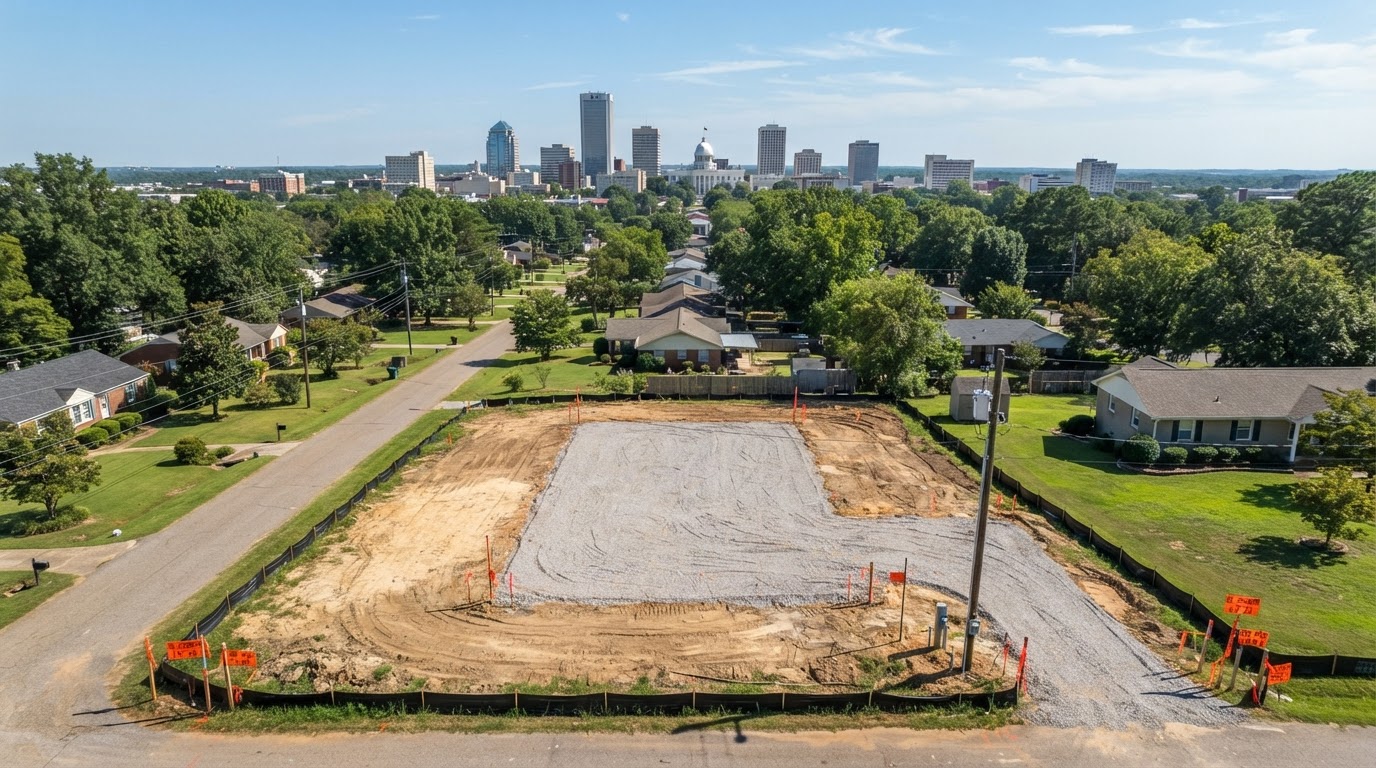
Authorizes the physical positioning of the home on the parcel in compliance with approved plot plans, boundary setbacks, and floodplain elevations.
Driveway & Access Connection
Approved by City Public Works or County Engineering (or ALDOT if accessing a state highway such as US-80 or US-231). Ensures sight-distance safety and proper culvert sizing for drainage.
Electrical Connection Permit
Pulled by a licensed electrician to install the service disconnect pedestal, verify grounding electrode systems, and coordinate meter set with Alabama Power or local electric co-op.
Plumbing & Septic Approval
For municipal water/sewer, utility connection permits are required. For rural parcels, the Montgomery County Health Department must evaluate soil percolation and issue a septic permit before home installation.
4. Inspection Sequences and Setup Coordination
Successful manufactured home installations follow a defined sequence of inspections. Attempting to connect utilities or occupy the home before passing intermediate inspections causes significant delays:
- Pre-Installation Site & Footing Inspection: Site grading, access clearance, and foundation pad readiness are verified before sections are pulled into position.
- Pier & Anchoring Verification: The AMHC-certified installer constructs piers, levels the chassis, connects marriage lines, and torques ground anchors, purchasing and placing the official AMHC decal.
- Trade Rough-In & Service Hookup Inspections: Licensed trades complete water, drain, and electrical connections, requesting municipal or county inspections.
- Final Occupancy Authorization: Where required by municipal code, a final inspection verifies skirting, exterior steps/landings with handrails, and smoke detectors before permanent power is released and a Certificate of Occupancy is issued.
5. Common Application Delays in Montgomery County
Property owners frequently encounter preventable delays when navigating the permitting process. Understanding these pitfalls keeps your timeline on schedule:
Applying to the Wrong Agency
Submitting an application to the City of Montgomery for a property located outside municipal boundaries (or vice-versa) leads to administrative rejection and weeks of lost time.
Incomplete Site / Plot Plans
Drawings that fail to show property boundaries, proposed home dimensions, distance to all property lines, existing easements, and driveway locations will be returned for revision.
Unresolved Septic Approvals
Scheduling home delivery before obtaining a final septic permit from the Montgomery County Health Department leaves the home unlivable and utilities unable to connect.
Missing HUD Identification
Permit applications require the home's serial number, manufacturer name, year, and model. If labels or data plates are missing on a used home, record retrieval must be completed first.
6. Montgomery County Permit Preparation Checklist
Assemble these critical documents and parcel records before visiting the permit counter or submitting an online application:
Homeowner Permit Document Assembly Checklist
- 1Confirm Exact Parcel Jurisdiction & Tax PINVerify whether the address falls inside City of Montgomery municipal limits or unincorporated Montgomery County using county tax GIS.
- 2Verify Zoning ClassificationCheck with the City Land Use Division or County Planning to confirm manufactured housing is an allowed use on the parcel.
- 3Obtain Certified Survey / Scaled Plot PlanPrepare a site plan showing property lines, proposed home location, setbacks, driveway connection, and utility routes.
- 4Gather Home Identification DocumentsRecord manufacturer name, year of manufacture, model, serial numbers, dimensions, and HUD label numbers.
- 5Secure Health Department Septic PermitFor rural parcels, complete soil percolation testing and secure the ADPH on-site sewage disposal system permit.
- 6Verify Driveway Encroachment & Drainage CulvertObtain access permit approval from County Engineering, City Public Works, or ALDOT for driveway connection.
- 7Confirm AMHC-Certified InstallerVerify the installer's active state certification number and confirm AMHC decal purchase will be handled.
- 8Coordinate Licensed Trade ContractorsEngage licensed electricians and plumbers to pull required trade permits for power and plumbing hookups.
Verify current rules directly with the responsible federal, state, and local agencies:
- City of Montgomery Department of Inspections
Official city department responsible for building, electrical, plumbing, and mechanical permits within municipal limits.
- City of Montgomery Land Use & Planning Division
Governs municipal zoning classifications, allowed land uses, setbacks, and Board of Adjustment special exceptions.
- Montgomery County Commission & Engineering
County administration overseeing unincorporated property infrastructure, county roads, drainage, and property records.
- Alabama Department of Public Health (ADPH) On-Site Sewage
State public health agency governing septic system percolation testing, design approval, and installation permits.
Regulatory Notice: This guide provides general educational information. Requirements can change and may vary by property location and project scope. Confirm current rules with the applicable government agency and qualified professionals before beginning work. Last verified: November 2026. Research verified November 2026.
Frequently Asked Questions
Related Alabama Foundation & Setup Services
Explore related services and educational guides for manufactured-home foundation care across Montgomery and Central Alabama:
Need a Foundation or Support Assessment for Your Montgomery Property?
Request a Leveling Assessment to review your property conditions, existing foundation supports, and installation needs with an assessment coordinator.
Inquiries are coordinated for residential and commercial manufactured homes across Montgomery, Autauga, and Elmore counties.