
Moving a Mobile Home in Alabama: Permits and Setup Guide
A homeowner guide to the separate permissions and requirements involved in moving a manufactured home in Alabama—transport permits, destination property approvals, installation and anchoring standards, utility connections, and inspections—and how to verify each before scheduling a relocation.
What permits and approvals are needed to move a mobile home in Alabama?
Relocating a manufactured home in Alabama involves several separate permissions, not a single permit. Transporting the home may require an oversize or overweight permit from the Alabama Department of Transportation. Placing the home on a destination property requires zoning, land-use, and setback approval from the responsible local jurisdiction. Installation, anchoring, and setup must follow Alabama Manufactured Housing Commission standards and the manufacturer's instructions. Utility connections require authorized contractors and separate approvals, and inspections may be required before occupancy. Each requirement must be confirmed with the responsible authority for the specific home and property.
1. Can an Existing Manufactured Home Be Moved?
Relocation feasibility depends on the home's age, condition, documentation, destination, applicable state restrictions, transportation feasibility, and local land-use permissions. Not every existing home is legally or physically eligible to move. Some jurisdictions restrict placement of older or used manufactured homes, and some homes may not withstand transport due to age or deterioration.
Before planning a move, a homeowner should verify both the home's eligibility and the destination property's requirements. Assuming an existing home can simply be relocated can lead to denied permits, transport complications, or a home that cannot legally be placed at the new site.
- Home age and HUD-code classification
- Structural condition and transport suitability
- Available documentation (HUD label, data plate, installation records)
- Destination property restrictions
- Applicable Alabama relocation or placement rules
- Transportation route feasibility and access
- Local land-use and zoning permissions at the destination
2. Alabama Transportation Permits
Transporting a manufactured home typically requires an oversize or overweight permit because these homes exceed standard vehicle dimensions. The Alabama Department of Transportation (ALDOT) administers oversize/overweight permitting and establishes approved routes, travel conditions, and escort requirements for oversize loads.
Exact width thresholds, fee amounts, travel-hour restrictions, and permit exemptions change over time and must be confirmed against current official ALDOT rules before scheduling transport. A transport company experienced with manufactured homes usually obtains the permit, but the homeowner should verify that the required permit is in place before the move begins.
- Oversize or overweight transport permits through ALDOT
- Approved travel routes for oversize loads
- Home dimensions and weight
- Transport vehicle and equipment requirements
- Escort or pilot car conditions where required
- Scheduling and travel-hour restrictions
- Permit fees and application timing
3. Destination Property Approvals
The destination property's jurisdiction determines whether a manufactured home can be placed there. Zoning, land-use rules, manufactured-home placement standards, setbacks, floodplain restrictions, septic or sewer connections, site access, and grading all fall under the responsible local government—whether a municipality or an unincorporated county.
Municipal and unincorporated county requirements are not interchangeable. A parcel inside city limits may follow municipal planning rules, while a parcel in unincorporated county may follow county regulations. A homeowner must identify the correct jurisdiction and confirm placement requirements before arranging delivery.
- Zoning classification and allowed uses
- Land-use rules for manufactured-home placement
- Setback and lot dimension requirements
- Floodplain restrictions and elevation requirements
- Septic or sewer connection approvals
- Site access and driveway considerations
- Grading, drainage, and site preparation requirements
4. Site Preparation and Foundation Planning
Once placement is approved, the destination site must be prepared to receive the home. Site evaluation, drainage, approved foundation design, piers and footings, support layout, and utility coordination all influence whether the home can be installed correctly and remain stable.
Foundation and support requirements depend on the home's design, the manufacturer's installation instructions, soil conditions, and applicable standards. A homeowner should not assume the previous foundation configuration can automatically be reused at a new site.
- Site evaluation and soil conditions
- Drainage and grading planning
- Approved foundation design per manufacturer instructions
- Piers, footings, and support layout
- Utility coordination by authorized contractors
- Appropriate contractor and installer responsibilities
5. Setup, Anchoring, and Inspections
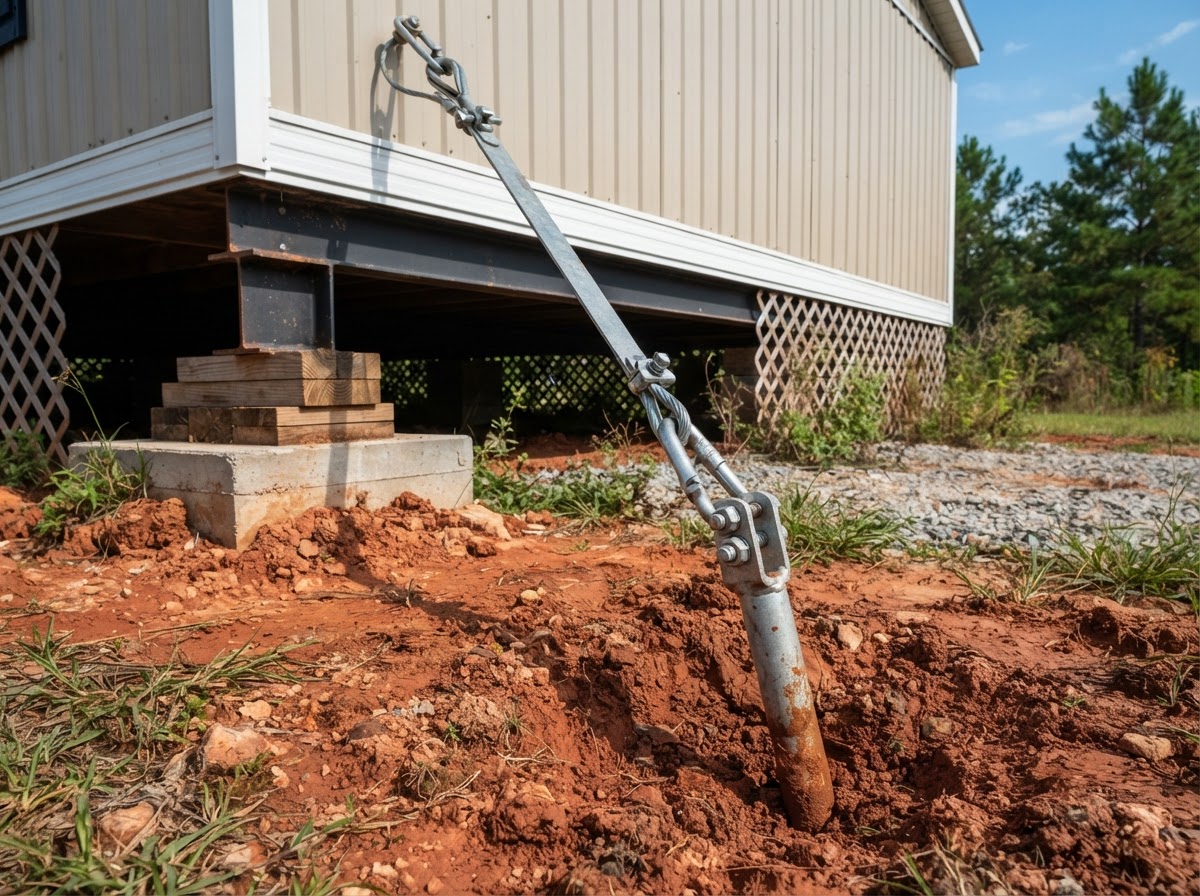
After transport and placement, the home must be set up, supported, leveled, anchored, and connected to utilities. These are distinct activities that may involve different qualified parties. Transporting the home, placing it, installing supports, leveling, connecting multi-section homes, anchoring, performing utility work, and completing inspections each have separate requirements.
Alabama Manufactured Housing Commission rules and applicable local requirements govern installation and anchoring. A homeowner should confirm which inspections and documentation apply and should not assume the business performs transportation or regulated installation work unless that capability is independently verified.
- Transporting the home to the site
- Placing the home on the prepared foundation
- Installing supports and piers
- Leveling the home
- Connecting multi-section homes at the marriage line
- Installing or reinstalling anchoring and tie-downs
- Utility connections by authorized professionals
- Inspection and documentation before occupancy
6. Mobile Home Relocation Planning Checklist
The following checklist helps a homeowner organize the separate requirements involved in moving a manufactured home. Completing these steps before scheduling a move reduces the risk of denied permits, transport complications, or placement problems at the destination.
- Identify the home's year, manufacturer, and classification
- Verify the home's eligibility for the proposed relocation
- Confirm destination zoning and land-use approval
- Check current ALDOT transport permit requirements
- Obtain appropriate transport estimates from qualified movers
- Review destination site conditions and access
- Coordinate qualified installation personnel for setup
- Verify utility connection requirements
- Confirm applicable installation and anchoring inspections
- Preserve all permits, inspections, and setup documentation
Mobile Home Relocation Planning Checklist
- 1Identify the homeConfirm year, manufacturer, configuration, and HUD label or data plate information.
- 2Verify relocation eligibilityConfirm the home can legally and physically be moved to the proposed destination.
- 3Confirm destination zoningCheck with the responsible local jurisdiction that manufactured-home placement is allowed.
- 4Check ALDOT transport requirementsVerify current oversize/overweight permit rules, routes, and travel conditions.
- 5Obtain transport estimatesGet quotes from qualified transport companies experienced with manufactured homes.
- 6Review site conditionsEvaluate drainage, access, grading, and foundation readiness at the destination.
- 7Coordinate installation personnelArrange qualified installers for setup, leveling, and anchoring per AMHC standards.
- 8Verify utility requirementsConfirm authorized contractors for electrical, plumbing, and septic or sewer connections.
- 9Confirm inspectionsVerify which installation, anchoring, and occupancy inspections apply.
- 10Preserve documentationKeep all permits, inspection records, and setup documentation for future reference.
Verify current rules directly with the responsible federal, state, and local agencies:
- Alabama Manufactured Housing Commission
State installation, anchoring, and installer certification standards for manufactured homes.
- Alabama Department of Transportation — Oversize/Overweight Permits
Current oversize and overweight transport permit requirements for moving manufactured homes.
- HUD Manufactured Housing Homeowner Resources
Federal manufactured-housing identification, installation, and relocation guidance.
Regulatory Notice: This guide provides general educational information. Requirements can change and may vary by property location and project scope. Confirm current rules with the applicable government agency and qualified professionals before beginning work. Last verified: November 2026. Research verified November 2026.
Frequently Asked Questions
Related Alabama Foundation & Setup Services
Explore related services and educational guides for manufactured-home foundation care across Montgomery and Central Alabama:
Planning a Manufactured-Home Relocation?
Discuss Your Project to understand setup, anchoring, and foundation requirements before scheduling a move in Alabama.
Inquiries are coordinated for residential and commercial manufactured homes across Montgomery, Autauga, and Elmore counties.