
Buying a Used Mobile Home? Foundation Inspection Checklist
A practical foundation inspection checklist for buyers evaluating a used mobile or manufactured home in Alabama—covering home identification, support and anchoring conditions, moisture and drainage, documentation, and the professional inspections that help protect a purchase decision.
What should I check before buying a used mobile home's foundation?
Before purchasing a used manufactured home, identify the home's classification and documentation (manufacturer, model, year, and HUD label or data plate where applicable), inspect visible foundation and pier conditions, evaluate anchoring and tie-down hardware, check for moisture, drainage, and underbelly damage, and review available installation, repair, and inspection records. Observable warning signs warrant professional evaluation, but they do not independently establish a diagnosis. A contractor's repair quote does not substitute for a complete buyer inspection or an engineering evaluation where one is appropriate.
1. Why the Foundation Matters Before Purchasing
A manufactured home's foundation and support system affect safety, repair planning, property usability, ongoing maintenance costs, relocation decisions, and financing considerations. Unlike cosmetic features, support and anchoring problems can be expensive to correct and may influence whether a home qualifies for certain loans or insurance.
Understanding the foundation's condition before purchase lets a buyer make an informed decision, negotiate repairs where appropriate, and avoid inheriting undocumented problems. No particular defect automatically makes a home unsellable, but undisclosed or unevaluated conditions can create significant post-purchase costs.
- Safety and structural stability
- Repair planning and budgeting
- Property usability and occupancy
- Ongoing maintenance costs
- Relocation and setup decisions
- Financing and insurance considerations
2. Identify the Home Before Evaluating It
Before assessing the foundation, a buyer should identify the home itself. The home's classification determines which construction standards, installation requirements, and financing options apply. A pre-1976 mobile home is not the same as a later HUD-code manufactured home, and a modular home is regulated differently from both.
Identification information helps confirm the home's age, construction standard, and whether documentation such as a HUD certification label or data plate exists. Missing or unreadable labels do not automatically disqualify a home, but they can complicate financing, relocation, and compliance verification.
- Manufacturer name
- Model designation
- Year of manufacture
- Single-wide versus double-wide or multi-section configuration
- HUD certification labels (for homes built after June 15, 1976)
- Data plate with design wind zone and roof load information
- Serial or identification number
- Available installation and setup records
3. Foundation and Pier Warning Signs
Several observable conditions may indicate support or alignment concerns worth investigating before purchase. These signs warrant professional evaluation, but they do not by themselves establish a diagnosis or a required repair. A sticking door could reflect hardware, framing, moisture, or support movement—and only an assessment can determine which.
Buyers should observe conditions from safe, accessible positions and avoid entering unstable crawl spaces or attempting structural measurements themselves.
- Uneven or sloping floors
- Localized sagging or soft areas
- Doors and windows that bind or no longer close properly
- Visible pier deterioration, cracking, or displacement
- Damaged, deteriorated, or missing pads and footings
- Marriage-line gaps or separation in multi-section homes
- Support components that appear altered or unsupported
- Evidence of previous unverified repairs
4. Moisture, Drainage, and Underbelly Conditions
Moisture is one of the most significant factors affecting manufactured-home foundation performance. Standing water, poor grading, and crawl-space drainage problems can deteriorate supports, damage underbelly materials, and create conditions that mimic or worsen settlement. A dry-appearing crawl space during one visit may still have a history of seasonal moisture.
Buyers should look for signs of recurring moisture and understand that moisture problems can affect foundation performance even when the supports themselves appear intact.
- Standing water or persistently damp ground beneath the home
- Poor grading or surface runoff directed toward the home
- Crawl-space drainage deficiencies
- Damaged or missing vapor barriers
- Torn, hanging, or deteriorated underbelly material
- Moisture-related deterioration of supports or framing
- Plumbing leaks or signs of past leaks
- Evidence of repeated flooding or seasonal water intrusion
5. Documents and Professional Inspections
A thorough pre-purchase review combines documentation review with appropriate professional inspections. These processes are distinct: a general home inspection evaluates overall condition, a foundation evaluation focuses on support and anchoring, an engineering inspection addresses structural certification where required, and installation history documents how the home was set up.
A contractor's repair quote is not a substitute for a complete buyer inspection. Buyers should understand which inspections are appropriate for their transaction and which professionals are qualified to perform them.
- General home inspection for overall condition
- Foundation and support evaluation
- Engineering inspection where structural certification is required
- Installation history and setup documentation
- Repair invoices and prior work records
- Permit documentation where applicable
- Title and ownership verification
- Financing requirements, including any lender-required certifications
6. Used Manufactured-Home Purchase Checklist
The following checklist organizes a pre-purchase foundation review into practical categories. A buyer can use it to gather information, identify concerns, and prepare questions for the seller, lender, inspector, and appropriate agencies before negotiating repairs or closing.
- Home identity: year, manufacturer, model, HUD label, data plate, serial number
- Foundation: piers, footings, pads, alignment, visible damage or displacement
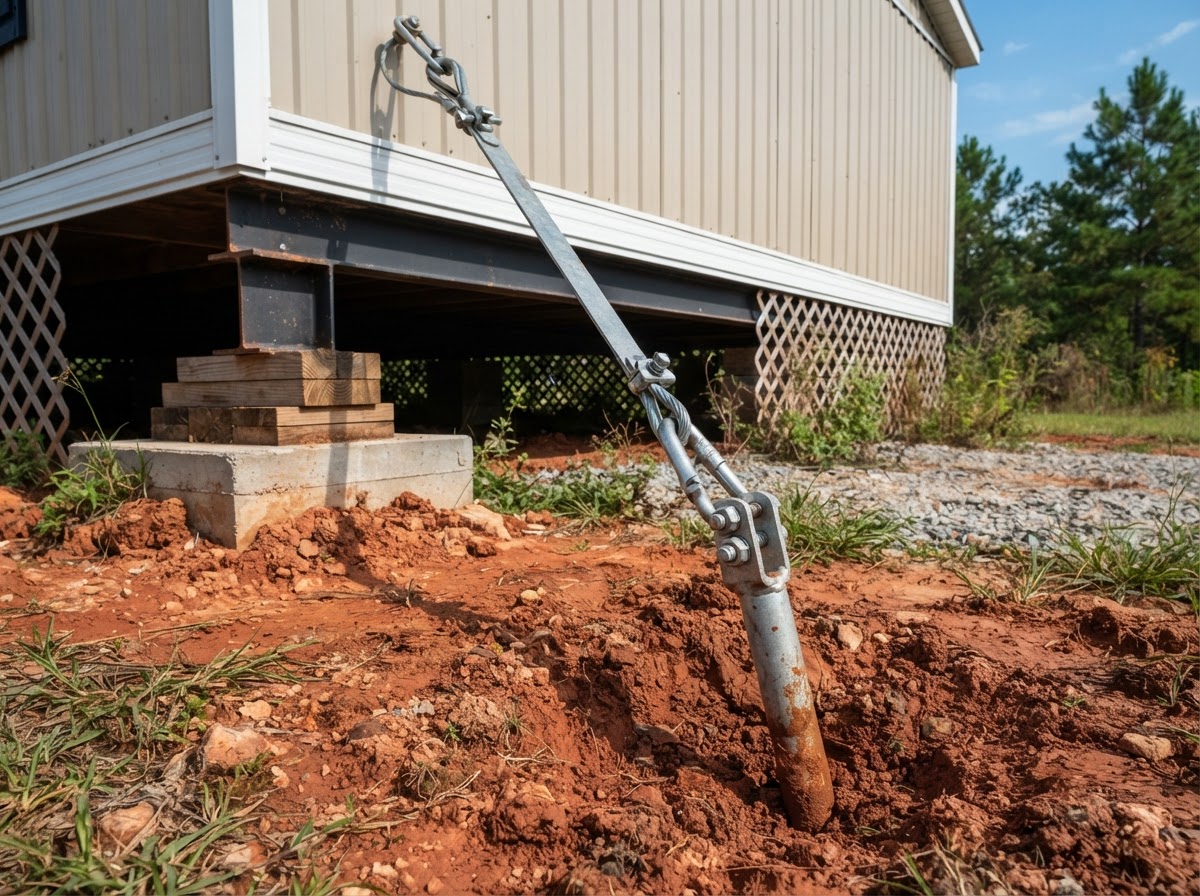
- Anchoring: tie-down straps, ground anchors, connection hardware, available records
- Moisture: drainage, crawl-space condition, underbelly, vapor barrier, plumbing leaks
- Documentation: installation records, inspections, repairs, permits, prior engineering reports
- Transaction: questions for the seller, lender, inspector, and the appropriate regulatory agency
Used Manufactured-Home Foundation Purchase Checklist
- 1Confirm home identityVerify manufacturer, model, year, configuration, and HUD label or data plate information.
- 2Inspect visible foundationObserve piers, footings, pads, and alignment from safe, accessible positions.
- 3Review anchoring conditionCheck tie-down straps, anchors, and connection hardware for corrosion or damage.
- 4Assess moisture and drainageLook for standing water, grading issues, underbelly damage, and vapor barrier condition.
- 5Gather documentationCollect installation records, repair invoices, inspection reports, and permits.
- 6Arrange qualified inspectionsSchedule a home inspection, foundation evaluation, or engineering inspection as appropriate.
- 7Review financing requirementsConfirm any lender-required certifications or documentation before closing.
- 8Prepare transaction questionsList questions for the seller, lender, inspector, and the appropriate regulatory agency.
Verify current rules directly with the responsible federal, state, and local agencies:
- HUD Manufactured Housing Labels and Data Plates
Federal guidance on HUD certification labels, data plates, and home identification.
- Alabama Manufactured Housing Commission
State installation, inspection, and installer certification standards for manufactured homes.
Regulatory Notice: This guide provides general educational information. Requirements can change and may vary by property location and project scope. Confirm current rules with the applicable government agency and qualified professionals before beginning work. Last verified: November 2026. Research verified November 2026.
Frequently Asked Questions
Related Alabama Foundation & Setup Services
Explore related services and educational guides for manufactured-home foundation care across Montgomery and Central Alabama:
Evaluating a Used Mobile Home's Foundation?
Discuss Your Project to request a foundation assessment and understand the support, anchoring, and moisture conditions before you buy.
Inquiries are coordinated for residential and commercial manufactured homes across Montgomery, Autauga, and Elmore counties.