
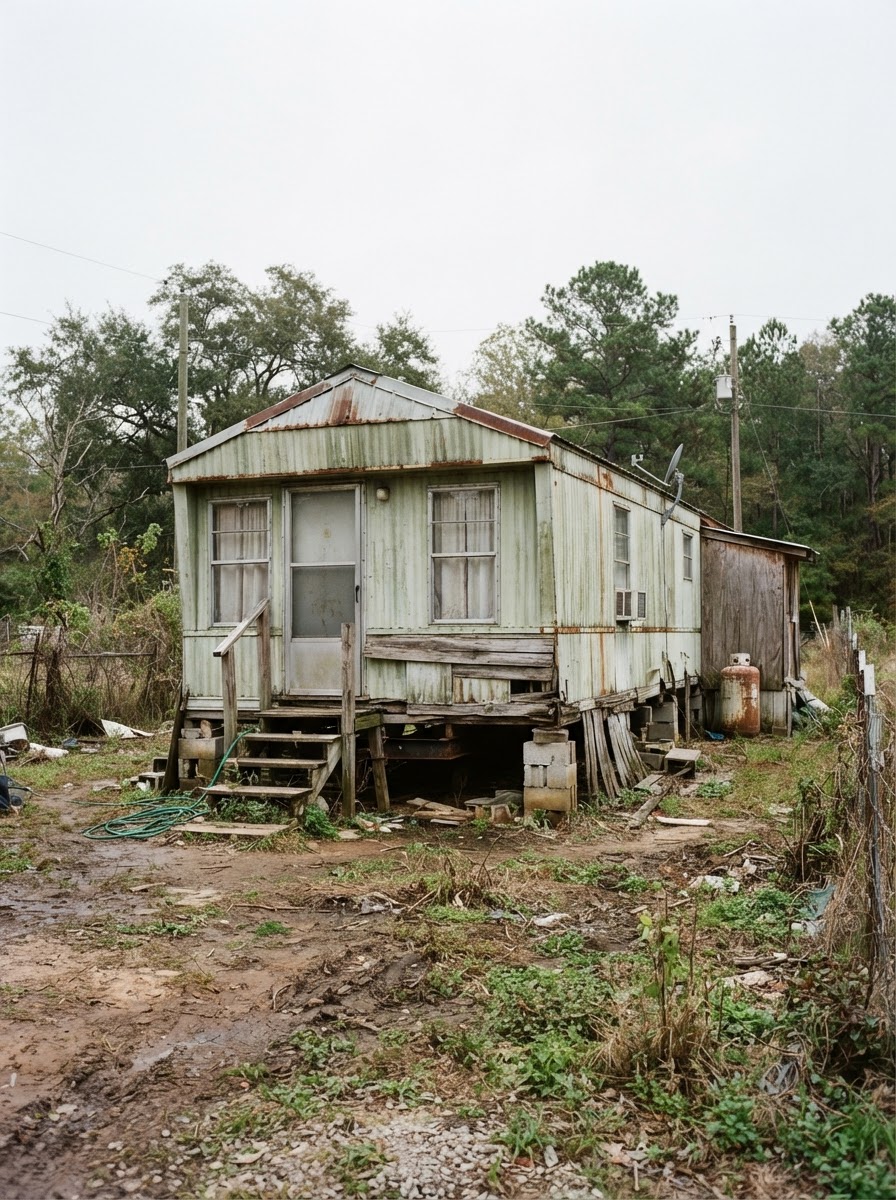
Leveling Older Mobile Homes (Pre-1976) in Montgomery
A mobile home built before 1976 is not the same animal as a modern HUD-code manufactured home. It was built under different standards, often with different support systems, and frequently with little or no surviving documentation. When an older home shows an alignment or support concern, that history matters — and it changes how an assessment is approached.
This page explains leveling and support considerations for older pre-1976 mobile homes near Montgomery without assuming that every older home is structurally deficient, that every older home needs the same fix, or that pre-1976 construction is interchangeable with later manufactured housing. It does not publish universal retrofit methods or structural repair instructions.
Common Support Concerns in Older Mobile Homes Near Montgomery
Older homes accumulate decades of use, repair, and exposure. The concerns below are common — but they are reasons to assess, not assumptions that every older home shares them or that any one of them establishes a particular diagnosis. An older home can be sound and still show a symptom, just as it can be troubled and show none.
Aging Support Components
Previous Repairs and Alterations
Unknown Installation History
Floor Deterioration
Moisture Damage
Framing Concerns
Existing Pier or Footing Conditions
Limited Documentation
Age is a reason to look — not a verdict
Not every older home is structurally deficient, and not every symptom in an older home comes from the supports. Moisture, framing, and ordinary wear can each produce what looks like a leveling problem. An assessment identifies the actual condition rather than assuming the worst from the year.
How Older Mobile Homes Differ From Later Manufactured Homes
The federal HUD Manufactured Home Construction and Safety Standards took effect in 1976. Homes built before that were constructed under a different framework — state or local codes, or in some cases no dedicated standard at all. That regulatory history is not a footnote; it affects construction, the support systems likely to be present, the documentation that may or may not exist, and how a leveling assessment is approached.
The distinctions below are at a homeowner level, not a code treatise. Where specific technical or regulatory claims are needed, they are verified against current authoritative sources rather than assumed — this page does not assert that pre-1976 homes are illegal, ineligible for financing, or unsuitable as a blanket statement.
Regulatory History
Construction Differences
Support Systems
Documentation
Financing and Eligibility
No Universal Retrofit
Not interchangeable
A pre-1976 mobile home is not automatically equivalent to a later HUD-code manufactured home for leveling, anchoring, financing, or regulatory purposes. The differences are considered for the specific home, not papered over with a one-size approach.
Why an Older Home May Need Qualified Evaluation
Because an older home's construction and history are often uncertain, an assessment sometimes has to sort among several possible conditions before any work is planned. The categories below describe what an assessment separates — and why a single “just level it” response is not always the right one.
Leveling Concerns
Genuine support-alignment issues that re-leveling may address — confirmed, not assumed from age.
Foundation Deterioration
Supports, pads, or footings that have degraded to the point that repair or replacement, not just adjustment, is the relevant scope.
Structural Framing Issues
Floor or frame problems above the supports that produce symptoms similar to settlement but need a different response.
Moisture-Related Damage
Deterioration from long-term exposure that may be the real cause of an alignment symptom and may need drainage or enclosure work.
Replacement Considerations
Where an existing support system can no longer carry the home safely, a broader replacement may be appropriate — one option among several, not a default.
Other Specialized Repairs
Skirting, underbelly, anchoring, or drainage work that is separate from leveling but may affect whether leveling holds.
No universal retrofit method, pier dimension, anchor specification, or structural repair procedure is published here. For an older home, the appropriate work depends on the actual structure, the existing supports, the site conditions, and qualified professional judgment — and where an engineering evaluation is warranted, it is performed by a licensed professional rather than assumed by a contractor.
Older Mobile Home Leveling Questions Near Montgomery
Common questions from owners of pre-1976 mobile homes about leveling, support, and assessment.
Related Leveling, Repair & Inspection Services
- Mobile Home LevelingThe broad leveling overview
- Mobile Home Re-LevelingCorrection of a prior level condition
- Mobile Home Foundation RepairWhen findings go beyond leveling
- Mobile Home Foundation InspectionsAssessment versus certification
- Contact & Older-Home InquiryDescribe the home and observed concerns
Discuss an Older Mobile Home's Support Concerns
If you own an older mobile or manufactured home near Montgomery and have noticed an alignment, support, or moisture concern, describing the home's approximate age, any known history, the observed symptoms, and the site conditions helps frame an assessment. Where details are unknown, a clear “not sure” is fine.
Your inquiry will be reviewed and you will be contacted about appropriate next steps. The right response for an older home — leveling, repair, drainage, or a professional evaluation — is determined for your property, not assumed from its age, and no work or outcome is guaranteed before the home is assessed.